
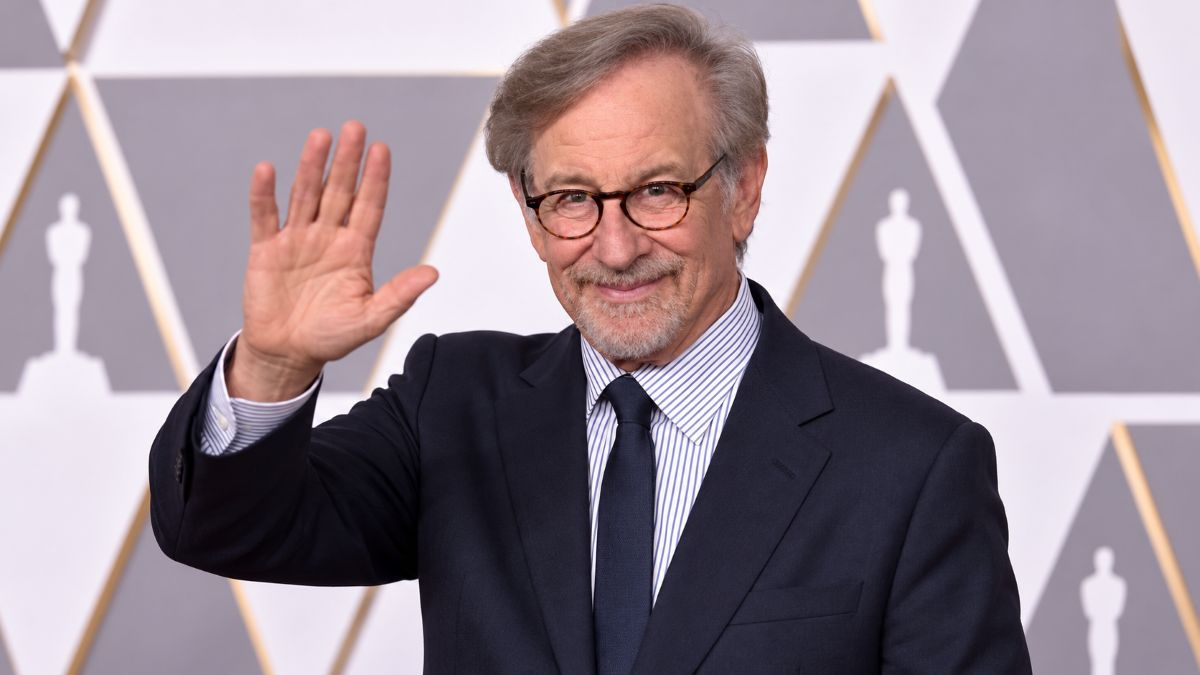
The next Transformers movie may be looking backward in order to figure out how to move forward.
Steven Spielberg, who has served as an executive producer across the live-action film series, is reportedly taking a more active creative role in the next installment. Michael Bay, who directed the first five films, is also said to be in early discussions about returning to the director’s chair.
For a franchise that has spent years trying to prove it can exist beyond the Bay era, that is not a small development. It raises a more complicated question: is Transformers returning to its roots because those roots still work, or because the franchise has not yet found a replacement identity strong enough to stand without them?
Spielberg’s involvement changes the tone of the reset
Spielberg has never been absent from the franchise, but a more hands-on role suggests Paramount wants the next film to feel less like another entry on a production line and more like a deliberate relaunch. That matters because the series is carrying more history than momentum.
The early movies were enormous global events. They were loud, expensive and unmistakably authored by Bay’s taste for military hardware, sun-drenched spectacle and mechanical destruction. Even viewers who disliked the films knew exactly what a Michael Bay Transformers movie looked and sounded like.
Later installments tried different tones and casts. Bumblebee earned praise for a warmer, more character-driven approach, while Rise of the Beasts attempted to widen the mythology and set up a crossover path that no longer appears to be the plan. The result is a franchise with recognizable characters but a less recognizable current identity.
Michael Bay would bring clarity — and baggage
A Bay return would immediately solve one problem: nobody would wonder what kind of movie Paramount was making. His version of Transformers is a defined product. That certainty has commercial value in an era when audiences are increasingly selective about franchise sequels.
But it also creates risk. Going back to the filmmaker who shaped the first five entries could be read as an admission that the franchise’s attempts to evolve never fully stuck. The challenge would be to recover the scale and confidence of the original run without repeating every excess that eventually made the series feel exhausted.
The best version of a Bay return would not be nostalgia for 2007. It would be an experienced blockbuster filmmaker revisiting material he knows intimately with the benefit of distance, changed audience expectations and a clearer understanding of what became overused.
The franchise is also entering a new emotional era
The next movie will arrive after the death of Peter Cullen, whose voice defined Optimus Prime for generations. That alone changes the emotional architecture of the franchise. Recasting or reimagining a character as iconic as Optimus requires more than a new voice. It requires the filmmakers to decide what continuity, legacy and familiarity mean now.
That makes Spielberg’s reported involvement more interesting. His best blockbuster instincts have always been rooted in emotional clarity beneath spectacle. Transformers does not need to become sentimental, but it could benefit from remembering that giant robots only matter when the human-scale stakes around them are legible.
A franchise built around machines has often worked best when the machines felt like characters rather than effects.
The real question is whether Paramount wants a sequel or a statement
Another Transformers movie is easy to understand. The brand remains globally recognizable, the toy line endures, and the characters can support animation, television and theatrical stories for years. What is harder is making the next movie feel necessary.
More Spielberg involvement and the possibility of Bay returning suggest Paramount understands that problem. This does not sound like a studio quietly moving ahead with installment eight. It sounds like a studio trying to make the next film feel like an event again.
That is the right goal. The franchise does not need to prove it can survive without its past. It needs to prove it can use that past without becoming trapped by it.
If Spielberg helps sharpen the story and Bay returns with something to prove, Transformers could rediscover the one quality its earliest movies possessed in abundance: the feeling that audiences were seeing something enormous that only this franchise could deliver.
The timing also matters because Paramount is operating inside a much larger corporate transition. A recognizable franchise with proven global awareness becomes even more valuable when a company is trying to reassure audiences and investors that scale can still produce events rather than simply more content. Transformers is one of the brands capable of carrying that weight.
But familiarity should not become the entire strategy. Spielberg’s involvement is most useful if it creates focus, not if it simply adds another famous name to the marketing. The next movie needs a clean point of view about which version of Transformers it wants to be and why audiences should care again.


Join the Conversation
Share your take on this story. Keep it relevant, respectful and on topic.