
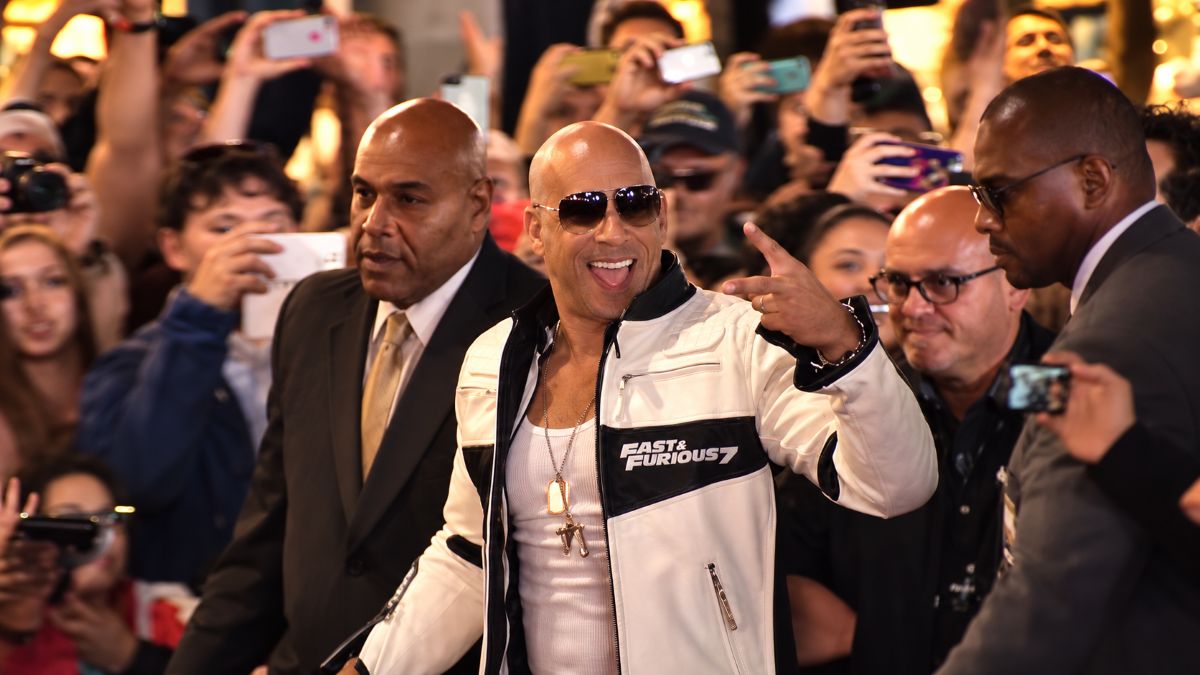
Fast & Furious has spent most of its life arguing that bigger is better.
Cars got faster. Stunts got less interested in gravity. The cast expanded. The mythology turned street racers into globe-trotting operatives capable of treating physics as a loose suggestion.
Now the franchise is heading somewhere that cannot solve every problem by making the explosion larger: television.
Peacock is testing what the franchise actually is
A live-action Fast & Furious series is moving forward at Peacock, extending Universal’s blockbuster property into episodic storytelling. Vin Diesel is attached as an executive producer, and the project represents the franchise’s most serious attempt yet to build a continuing television branch.
The obvious challenge is budget. The films sell theatrical spectacle, international locations and stunts designed to become trailers before audiences know the plot. A streaming series can still be expensive, but it cannot realistically behave like a two-hour movie repeated eight times.
That limitation may be useful. It forces the franchise to answer a question the movies sometimes avoid: what do viewers actually care about when nobody is jumping a car between skyscrapers?
“Family” finally has to become more than a slogan
The series has always insisted that family is its emotional center. The word became a meme because characters say it so often, but the idea is not meaningless. Loyalty, belonging, chosen family and the return of old relationships are the glue holding together a franchise that has otherwise reinvented its genre several times.
Television could make that theme more concrete. Episodic storytelling creates space for rivalries, local stakes, relationships and consequences that cannot be reset after a two-hour mission. It could introduce younger characters, expand legacy figures or explore corners of the universe that would never justify a $200 million theatrical release.
If Peacock understands that, the series does not need to imitate the movies. It needs to identify what the movies rush past.
The brand is large enough to support different speeds
One reason Marvel and Star Wars expanded so aggressively into streaming is that their worlds contain many genres. Fast & Furious is narrower, but it has still changed dramatically over time. The earliest films were street-racing crime dramas. Later entries became heist pictures, spy adventures and superhero-adjacent action spectacles.
That history gives television some room. A show could return to street-level racing, build a crime story around a new city, or follow characters whose problems do not require saving the world. The television format could even restore a sense of danger to action sequences simply by making them smaller and more personal.
What it should not do is become a cheaper imitation of the theatrical films. Audiences can see production scale. If the show tries to reproduce blockbuster spectacle on reduced resources, every limitation will become visible.
The Peacock series could decide whether Fast & Furious becomes a universe
Hollywood uses the word “universe” freely, but a franchise does not become one simply because executives announce multiple projects. A real universe contains stories that feel different while still belonging to the same world.
Fast & Furious has flirted with that idea through spinoffs and animation. A successful live-action series would be more significant because it would prove the brand can support a second storytelling rhythm at the same time the movies continue.
That is why this project matters more than another extension of the release calendar. If Peacock finds a version of Fast & Furious built around character, local stakes and serialized relationships, television could strengthen the movies instead of diluting them.
The franchise has already proved it can make cars fly.
Now it has to prove it can make viewers come back next week even when they stay on the road.
There is also a practical benefit to television: it can develop characters who would struggle to earn screen time in the movies. The theatrical ensemble has become so large that even popular figures can disappear for long stretches. A series can create new leads, establish younger drivers and build emotional investment before those characters ever cross into a feature film.
Used well, Peacock could become the place where the franchise grows people while theaters remain the place where it spends spectacle. That division of labor would make the expansion feel purposeful rather than merely bigger.
There is also an international dimension. The films became global by moving from one city to another, but television can make that network of locations feel more permanent. A series could establish crews, rivalries and recurring characters in one place, then let the movies cross through that world when the story justifies it.
That approach would give Peacock something more useful than a brand extension. It would give Universal a development pipeline: characters can earn audience affection on television before a theatrical film asks viewers to treat them as important.
That is the opportunity: let television handle the connective tissue the movies no longer have time to develop, then let the films arrive when the scale genuinely deserves a theater.



Join the Conversation
Share your take on this story. Keep it relevant, respectful and on topic.