
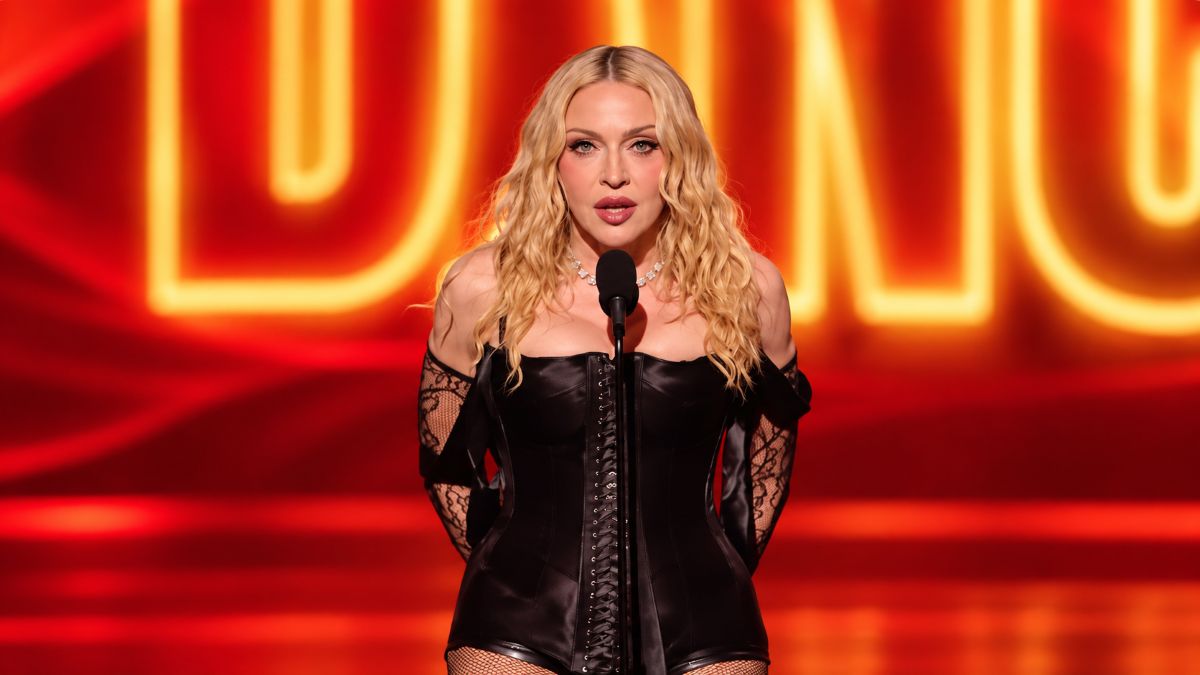
The 2026 MTV Video Music Awards ended with two different versions of pop dominance sitting beside one another.
Madonna won seven awards, more than anyone else that night, including Artist of the Year. Taylor Swift won Video of the Year for “The Fate of Ophelia,” Best Direction for “Opalite” and the inaugural Artist Director Honors. Those victories pushed Swift to 33 career VMAs, making her the most-awarded artist in the show’s history.
One artist controlled the ceremony. The other rewrote the leaderboard.
That combination made the night feel less like a normal awards show and more like a conversation about who gets to define pop history.
Madonna turned longevity into current-tense power
Legacy performances often arrive with an invisible disclaimer. The audience is being asked to honor what an artist meant rather than judge what the artist is doing now.
Madonna refused that framing.
Her seven wins were attached to current work, including Confessions II and its film component. She won Artist of the Year, Best Dance, Best Long Form Video, Best Album and additional craft categories, while her collaboration with Sabrina Carpenter also took a prize.
That matters because the VMAs have always rewarded cultural immediacy. Nostalgia alone is not enough to dominate a ballot this thoroughly.
Madonna’s night therefore functioned as something stronger than a lifetime-achievement celebration. It argued that an artist who helped create the visual grammar of MTV could still compete inside the system she influenced.
Swift’s 33rd win changed the historical hierarchy
Swift’s night carried a different kind of symbolism.
Her 33rd career VMA moved her past Beyoncé on the all-time awards count. She also received the first Artist Director Honors, a new prize designed to recognize musicians whose work behind the camera has expanded the possibilities of the music video.
That award is particularly revealing because it reflects how Swift has changed her own career architecture.
She is no longer being judged only as the performer inside the frame. Her directing credits have become part of the institution’s definition of her artistry.
Winning Video of the Year and a directing honor on the same night made that evolution impossible to treat as a side project.
The show needed both generations
The VMAs have spent years trying to solve a difficult programming problem: how do you honor the artists who built the institution without turning the ceremony into a museum?
The 2026 show found a temporary answer by putting legacy and contemporary power in direct conversation.
Madonna’s history with MTV reaches back to the earliest years of the awards. Swift’s history belongs to the era in which music videos migrated from television blocks to social platforms, YouTube premieres and streaming ecosystems.
Their victories make sense together because the medium changed around both of them.
Madonna helped prove that a music video could become an event. Swift built a career in an era where the event is distributed across platforms, clues, short films, premieres and fan interpretation.
The technology changed. The need for visual mythology did not.
Awards shows survive when the trophies tell a larger story
Nobody remembers every category from an awards ceremony. What lasts is the narrative audiences can summarize the next morning.
The 2026 VMAs had one.
Madonna returned to the center of the show and won more awards than anyone. Swift became the most-awarded artist in VMA history. Snoop Dogg hosted. Nirvana received the Video Vanguard honor. Newer artists such as Sienna Spiro and LISA collected major category wins alongside established superstars.
That gave the ceremony a sense of lineage instead of random accumulation.
MTV’s challenge now is maintaining that tension. An awards show cannot depend every year on two of the biggest pop stars of the last forty years creating history simultaneously.
But the lesson is useful.
The VMAs are most interesting when the awards are not merely telling audiences what was popular. They are telling audiences how the definition of pop power is changing.
In 2026, Madonna owned the night.
Taylor Swift owned the record book.
MTV got to claim both stories at once.
The ratings context makes the generational framing even more valuable. CBS and MTV reported a sharp audience increase for the 2026 ceremony, suggesting the combination of event television, major legacy names and current pop stars gave viewers a reason to watch in real time rather than settle for clips the next morning.
That is an increasingly difficult achievement for awards shows. Music fans can see performances, speeches and winners almost instantly on social platforms. The live broadcast therefore needs moments that feel larger when experienced together. Madonna’s return and Swift’s record chase gave the show two such narratives before the first trophy was handed out.
It also helped that the show offered a reason for different generations to care at the same time. A viewer tuning in for Madonna could encounter newer artists; a Swift fan could watch an institution place her inside a longer visual-history conversation. That cross-generational traffic is exactly what legacy award brands need if they want to remain events rather than clip factories.

Join the Conversation
Share your take on this story. Keep it relevant, respectful and on topic.