
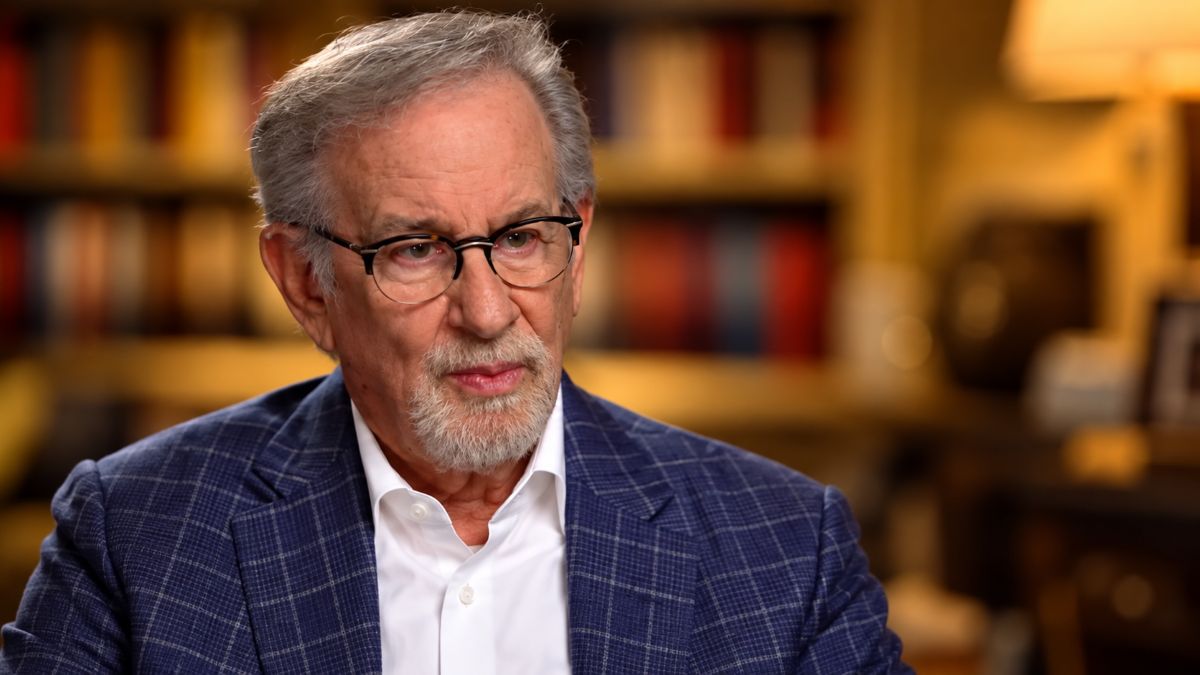
Disclosure Day already had the kind of theatrical life Hollywood keeps saying it wants more often.
Steven Spielberg’s UFO mystery opened in June, played as a genuine big-screen event and reached roughly $241 million worldwide, according to Peacock’s own streaming announcement. Now the film moves into a different phase when it begins streaming exclusively on Peacock on October 9.
The interesting question is no longer whether audiences would leave the house for it. They did. The question is what happens when a 145-minute Spielberg event becomes one more tile inside a subscription service.
Theatrical success and streaming success are not the same thing
Movies used to move through windows that each had a distinct identity: theater, rental, pay television, home video. Streaming has compressed those stages into one enormous library where a summer blockbuster can sit one row away from a sitcom episode, an NFL game and a reality reunion.
That changes the work a movie has to do.
In theaters, Disclosure Day benefited from scale. Steven Spielberg’s name, Emily Blunt, Josh O’Connor and an old-fashioned “you should see this on a giant screen” campaign helped create urgency. On Peacock, the movie needs to create a different kind of value: retention, discovery, repeat viewing and the sense that a subscription contains something people were recently willing to buy tickets to see.
For Peacock, that is precisely why the movie matters.
Peacock needs movies that change the perception of the library
Every streaming service has a catalog. The harder task is convincing audiences that the catalog contains current cultural objects rather than yesterday’s leftovers.
A Spielberg film arriving only a few months after its theatrical debut helps. It gives Peacock a recognizable centerpiece for October and creates an easy marketing sentence: the movie people were talking about this summer is now included with your subscription.
The film’s genre also travels well. UFO stories, conspiracy thrillers and mystery-driven blockbusters can generate second-wave conversation once viewers are able to pause, rewind and argue about details. A theatrical audience experiences the movie once in a fixed environment. A streaming audience can turn it into a weekend watch, a family recommendation, a social-media theory thread or background viewing that unexpectedly becomes active viewing.
Those behaviors do not show up in box-office grosses, but they matter enormously to a platform.
Spielberg’s name still functions differently from most brands
One reason Disclosure Day is valuable to Peacock is that it does not arrive primarily as chapter 11 of an existing franchise. Spielberg himself is the brand.
That is increasingly unusual. Studios have spent years training audiences to recognize universes, superheroes, horror labels and sequel numbers. A Spielberg event asks viewers to trust a filmmaker instead.
The movie’s reported global gross suggests that trust still has commercial weight. Its streaming performance will reveal something else: whether filmmaker-driven event status can continue to generate attention after the urgency of opening weekend disappears.
If it can, Peacock gets more than a hit movie. It gets proof that recent theatrical prestige can make the platform itself feel more premium.
The second life may matter more than it used to
Hollywood once treated post-theatrical windows as downstream revenue. In the streaming era, the second life can reshape the first one. A movie that finds an enormous home audience may build sequel interest, revive online discussion and turn people who skipped the theater into future ticket buyers.
Disclosure Day is especially suited to that kind of afterlife because its premise invites curiosity even from people who did not prioritize it in June.
Peacock’s October 9 launch therefore is not merely another release date. It is a test of whether a modern event movie can keep feeling like an event after it becomes instantly available from the couch.
The box office already gave Spielberg one answer. Streaming is about to give him another.
There is also a practical recommendation effect at work. A theatrical release lives and dies by timing: if someone misses the opening weeks, the movie gradually disappears from the local schedule. Streaming removes that friction. Peacock can keep resurfacing the film through science-fiction collections, Spielberg pages, awards-season shelves and personalized recommendations for months. A title that was once competing for a finite number of screens can become permanently rediscoverable.
That is one reason studios increasingly care about the full life cycle instead of a single opening number. Theatrical success creates status; streaming can convert that status into long-tail attention. When the same company controls both the studio pipeline and the destination platform, those phases can be marketed as parts of one campaign rather than separate businesses.
There is one more audience question worth watching: whether the people who skipped the theatrical run because of time, price or simple habit now turn the film into a streaming hit. That group is not evidence that theatrical failed; it is evidence that modern movies can reach different audiences in different windows. A healthy release can use both rather than pretending one must replace the other.

Join the Conversation
Share your take on this story. Keep it relevant, respectful and on topic.