
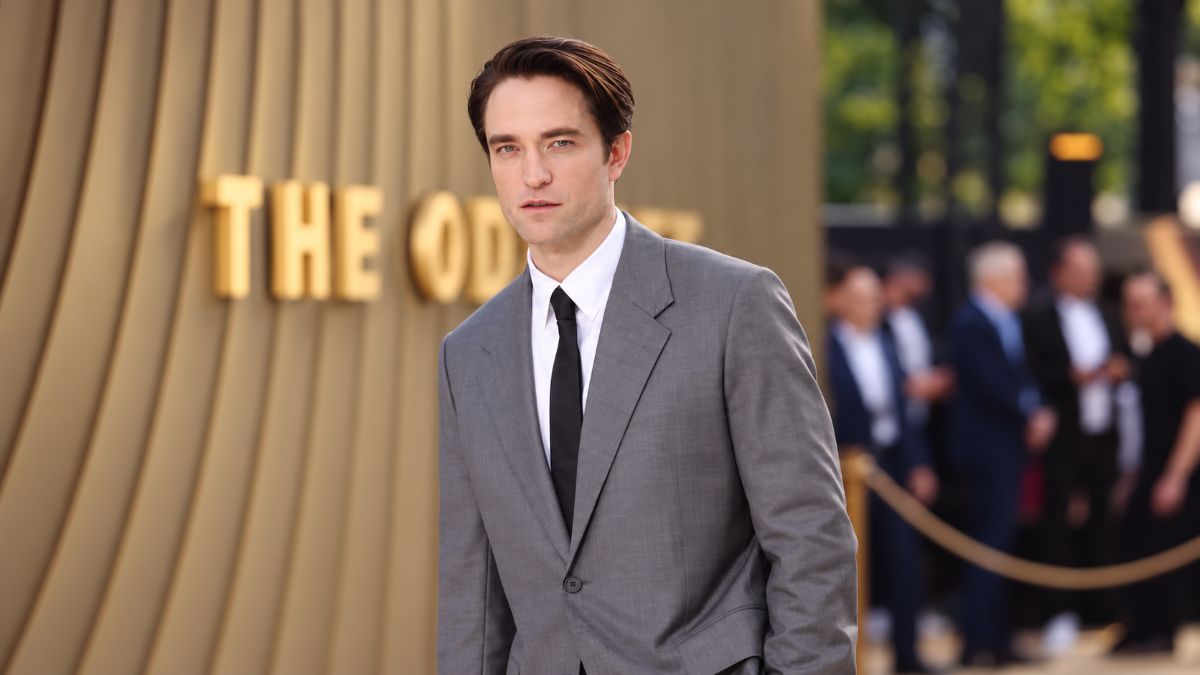
Primetime did not win the weekend box office. It may have done something more useful.
The Robert Pattinson true-crime thriller opened to roughly $19.2 million in North America, landing behind several larger commercial titles but giving A24 one of the strongest openings in its history. That number is striking because Primetime is not a sequel, not a superhero movie, not a decades-old franchise revival and not an animated family brand.
It is an adult thriller built around a recognizable star, a disturbing real-world media idea and the promise that audiences would get something they had not already seen three times.
That is exactly why the opening matters.
The weekend exposed how valuable star power still is
Hollywood periodically declares the movie star dead, usually after a major actor appears in a film that does not work. Then someone like Robert Pattinson opens a strange adult thriller to nearly $20 million and the obituary looks premature again.
Pattinson’s current position is unusual because he has credibility in two directions at once. He can anchor giant studio projects, but he has also spent years making choices that signal curiosity rather than pure commercial calculation. That means audiences do not necessarily know what a Pattinson movie will be, but they have a reason to believe it will at least be a movie with a point of view.
That trust has value.
An original film cannot rely on pre-existing characters to explain itself. It needs another shortcut. A star with a recognizable creative identity can become that shortcut.
For Primetime, Pattinson is not merely the actor on the poster. He is part of the genre promise.
True crime gave the movie familiarity without franchise baggage
The film’s subject matter also occupies a useful middle ground. The culture already understands the language of televised predator investigations, hidden-camera confrontation and the uneasy relationship between crime and entertainment.
That familiarity reduces the amount of explanation a marketing campaign needs.
But unlike a traditional franchise, the movie is not locked into a mythology. Viewers can walk in without homework. They do not need to remember what happened in a previous installment or know which cinematic universe is connected to which post-credit scene.
That matters because adult audiences have increasingly been offered two extremes: enormous franchise spectacles or small prestige releases that never receive event-level marketing.
Primetime found space between those categories.
It was sold as something adults could go see on opening weekend, not something they could eventually catch when it appeared on a streaming homepage.
A24 keeps learning how to scale without becoming a conventional studio
The opening is also another sign of A24’s evolution.
The company built its reputation on distinctive films that could become culturally enormous without requiring enormous box-office grosses. But as its ambitions have grown, so has the need to turn that identity into wider theatrical business.
A roughly $19 million debut shows what that can look like when the pieces line up.
The studio does not need to imitate the franchise model if it can make originality itself feel like an event. That is harder, but it is also more defensible. A studio that convinces audiences to show up for tone, filmmaker, cast and concept has more flexibility than one that depends entirely on a limited number of inherited brands.
The challenge is consistency. Not every unusual A24 release will have Pattinson, a highly marketable premise and the right cultural timing.
But a breakout like Primetime expands the ceiling for the next one.
The real test begins after opening weekend
A strong debut is not the same thing as a durable hit. Adult thrillers live or die on conversation, word of mouth and whether the audience that arrived early convinces the next group that the theatrical trip is worth it.
That makes the second weekend especially revealing.
If Primetime holds, Hollywood will have another example to point to when arguing that audiences still want original adult movies when those movies are actually marketed as important releases.
If it falls sharply, the opening will still prove that curiosity can be created, but the business lesson will be narrower.
Either way, the first weekend already delivered something studios claim they want and rarely achieve: people showed up for a movie without a numeral in the title.
That is why Primetime may be more significant than its No. 4 position suggests.
The industry does not need every original movie to beat Marvel. It needs enough of them to prove that moviegoing can still be built around discovery.
For one weekend, Primetime did exactly that.
There is also a useful lesson in where the movie landed on the chart. Fourth place can sound modest until the films above it are considered. A rereleased Marvel phenomenon, a major horror brand and a Brad Pitt vehicle occupied the same weekend. Primetime did not need to beat those films to prove its value; it needed to demonstrate that an adult original could stand beside them without disappearing.
That distinction matters for exhibitors too. A healthy theatrical marketplace cannot survive on one demographic or one type of release. A weekend where several different movies attract meaningful audiences gives theaters more flexibility than a calendar dominated by a single giant title followed by empty screens.





Join the Conversation
Share your take on this story. Keep it relevant, respectful and on topic.