
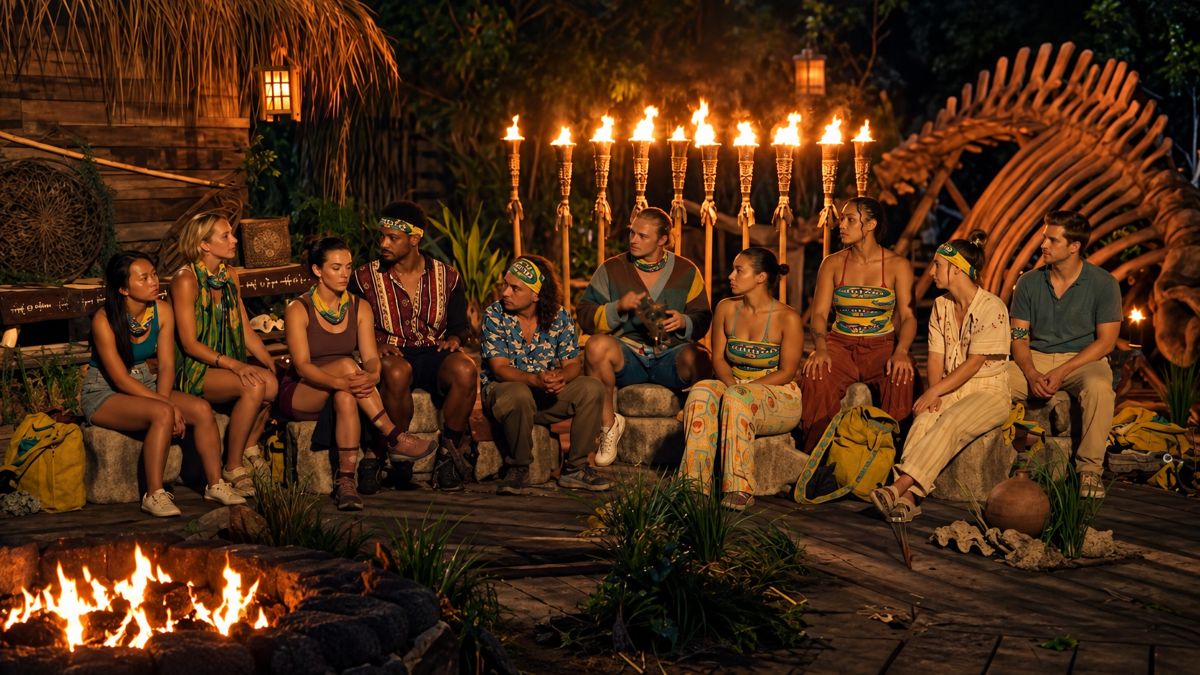
Survivor has spent much of 2026 celebrating itself. Season 50 was built as a milestone, loaded with history and the accumulated mythology of a reality franchise that has been on American television since 2000. Season 51 now has to do something harder: make viewers care about people they have never seen before.
CBS is calling the new season “The Open Era.” It premieres September 23 with 21 new castaways competing in Fiji for the $1 million prize and the title of Sole Survivor. The premiere is scheduled as a two-hour event before the series settles into 90-minute weekly episodes with Jeff Probst returning as host.
After an anniversary season, that clean reset is more important than it sounds.
The problem after a milestone season
Long-running reality shows develop a complicated relationship with their own legends. Returning-player seasons are easy to market because the audience already has opinions. A contestant can walk onto the beach carrying years of history, unresolved rivalries and expectations. The show does not need to spend the first hour explaining why this person matters.
A new-player season has to build all of that from scratch.
That is also where Survivor proves whether it still works as a format rather than merely as a fandom. The central idea has always been that strangers under pressure will create alliances, conflicts and social structures the producers could never fully script. If the franchise needs famous alumni to generate stakes, the experiment becomes smaller.
Season 51’s cast is deliberately varied. CBS and People describe 21 competitors ranging from their mid-20s to late 40s, with careers that include chef, farmer, attorney, medical student, professional wrestler, game designer, counselor and performer. Some arrive with obvious strategic narratives; others appear designed to be underestimated.
That occupational diversity matters less because viewers need a perfect demographic sample and more because Survivor works best when different kinds of competence collide. The person who looks physically dominant can be socially clumsy. The lawyer may decide to hide a profession that signals strategic ability. Someone with no outdoor experience may understand relationships better than the people who can build a shelter in minutes.
The Open Era needs more than a label
The title “Open Era” suggests the production wants viewers to think of this as a new chapter rather than Season 50 plus one. Whether the game itself changes dramatically is almost secondary. The psychological reset is useful. Anniversary seasons naturally point backward. A post-anniversary season has to point forward.
The two-hour premiere gives producers room to establish that new world. Twenty-one players is a lot of people to introduce, especially when modern Survivor also has to explain advantages, tribe structures, challenges and strategy. The longer opening episode can help prevent early castaways from becoming names on a chyron rather than characters.
The 90-minute weekly format remains one of the most consequential improvements to the modern show. Extra runtime gives episodes more space for camp life and social relationships instead of reducing everything to challenge, advantage and Tribal Council mechanics. That matters enormously with a new cast because the audience needs to see why alliances form before those alliances can feel meaningful when they break.
New players arrive with old knowledge
There is still a tension at the heart of contemporary Survivor. The game has accumulated so much strategic knowledge that new players arrive having studied old seasons, podcast discussions and statistical patterns. They are strangers to one another, but not necessarily strangers to the game. Many understand the language of shields, threat levels, voting blocs and endgame résumés before they ever touch the beach.
That can make the show feel optimized. Players know which mistakes previous players made and arrive determined not to repeat them. But reality television is excellent at punishing certainty. Hunger, exhaustion, ego and genuine affection interfere with even the most carefully prepared strategy.
Season 51’s job is to create situations where preparation is useful without becoming predictive.
The casting can help. A professional wrestler may be comfortable performing confidence but still struggle to know when other players believe it. A criminal-defense attorney may understand persuasion yet discover that hiding her profession creates its own complications. A lifelong fan can enter with a perfect theory of Survivor and find that theory collapsing the moment another person behaves irrationally.
That unpredictability is the real value of an all-new cast.
The franchise has to stop leaning on its past
There is also something healthy about moving immediately away from the nostalgia of Season 50. Franchises can become addicted to anniversaries, reunions and legacy casting because the emotional work has already been done. Survivor has enough history to celebrate itself almost indefinitely. The more interesting demonstration of confidence is to say that the next great character might be someone the audience has never heard of.
That is why The Open Era is a useful label even before we know exactly what it means mechanically. It frames Season 51 as an invitation to start fresh.
Survivor does not need to forget its past. The show’s history is part of what makes a 51st season remarkable. But longevity becomes meaningful only if the format can still create new history.
Twenty-one strangers arrive on September 23. By the end of the season, the best outcome for Survivor is not simply that one of them wins a million dollars.
It is that viewers cannot imagine the franchise’s history without them.