
A one-season renewal says a network wants more episodes. Three additional seasons say something else entirely.
Peacock has ordered three more seasons of The Traitors, with Alan Cumming set to continue hosting. The commitment comes after a season that won seven Emmys and delivered the show’s biggest ratings to date. NBCUniversal says the most recent Peacock season reached 8.1 billion minutes viewed and that viewership increased 72 percent over the previous season.
At the same time, NBC has already extended the format with The Traitors: New Blood, the civilian version that launched on broadcast television and streams next day on Peacock.
This is no longer simply a successful reality series. It is becoming a piece of franchise infrastructure.
Reality hits are valuable because they can expand without breaking
Scripted franchises often require the same stars, the same fictional world and increasingly expensive production. Reality formats can expand differently. The castle remains recognizable. The rules remain recognizable. Alan Cumming remains the theatrical center. But the contestants can be replaced every season without the audience feeling that the premise has been recast.
That flexibility is enormously valuable.
It allows Peacock to build anticipation around casting announcements, turn former contestants into recurring personalities and create adjacent versions without asking viewers to learn a new mythology. The format itself becomes the brand.
New Blood pushes that logic further by taking the basic engine from celebrity competition into a civilian broadcast version.
Alan Cumming is the rare host who functions like intellectual property
The biggest challenge in expanding The Traitors is not replacing contestants. It is preserving tone.
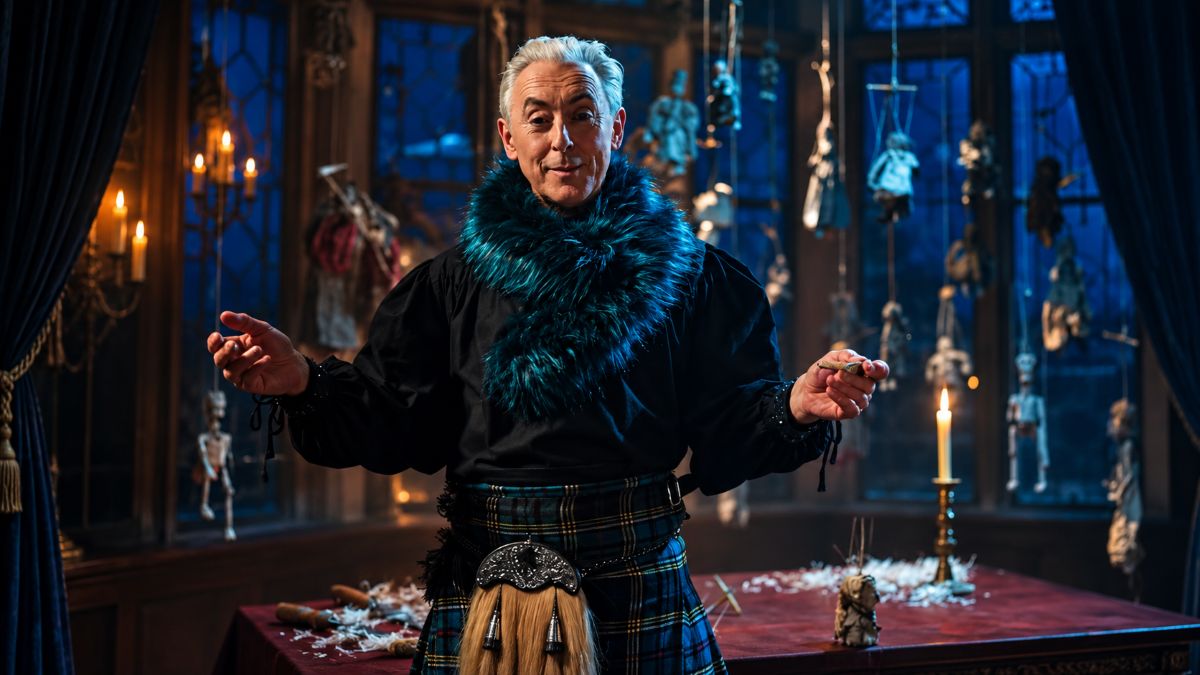
Cumming has become inseparable from the American version because he does more than explain missions. His wardrobe, delivery and exaggerated delight in the show’s absurdity give the format a personality that can survive dramatic cast changes.
That is why his return across future seasons matters so much. Peacock is renewing the game, but it is also preserving the human element that makes the game distinctive.
Reality television has plenty of hosts who could technically run a roundtable. The Traitors has a host who makes the roundtable feel like theater.
NBCUniversal is learning how to move a streaming hit across platforms
The Traitors: New Blood is especially important because it tests whether a Peacock-born identity can travel onto NBC rather than simply being promoted there.
NBCUniversal says the first two episodes averaged about 6 million viewers across NBC and Peacock and reached more than 5 million new viewers across platforms. Those are corporate figures, but the strategic point is clear: broadcast television can introduce the franchise to people who may never have clicked on the Peacock original.
That relationship works in both directions. NBC can create awareness; Peacock can provide the deeper library, celebrity seasons and next-day access.
Instead of treating broadcast and streaming as separate products fighting for the same audience, the company is using one franchise to move viewers between them.
The danger is turning scarcity into wallpaper
Three additional seasons, a civilian edition and a growing cast ecosystem create enormous opportunity. They also create the obvious risk: too much Traitors.
The format depends on paranoia, surprise and the feeling that every cast configuration creates new social chemistry. If expansion becomes mechanical, the castle can start feeling like a factory.
That makes casting and pacing more important, not less. Peacock has bought itself years of runway. It now has to make sure those years do not feel interchangeable.
Still, the scale of the commitment tells us how the company sees the property now. The Traitors is no longer a reality show that happens to be successful.
It is one of Peacock’s defining franchises — and NBCUniversal is planning accordingly.
The renewal also changes the casting economy around the show. Once contestants know that The Traitors is not a temporary phenomenon, appearing in the castle becomes a repeatable career move for reality personalities, athletes, comedians and other public figures. That gives producers a deeper pool of potential players and gives Peacock more leverage to create combinations that feel surprising rather than simply famous.
At the same time, a long runway allows the franchise to build traditions. Repeated visual motifs, returning challenges, recurring jokes and Cumming’s ceremonial flourishes can become part of the pleasure in the same way viewers return to competition formats for structure as much as surprise. The trick will be protecting enough unpredictability that tradition never becomes routine.
The franchise’s success also proves something about communal television. The Traitors is designed to be argued about: who is lying, who is reading the room correctly, who is playing too hard. That makes weekly release especially valuable. Peacock is not only renewing episodes; it is renewing a recurring conversation that keeps the service present in social feeds for months at a time.
That sustained conversation is difficult to manufacture and even harder to replace.






Join the Conversation
Share your take on this story. Keep it relevant, respectful and on topic.