
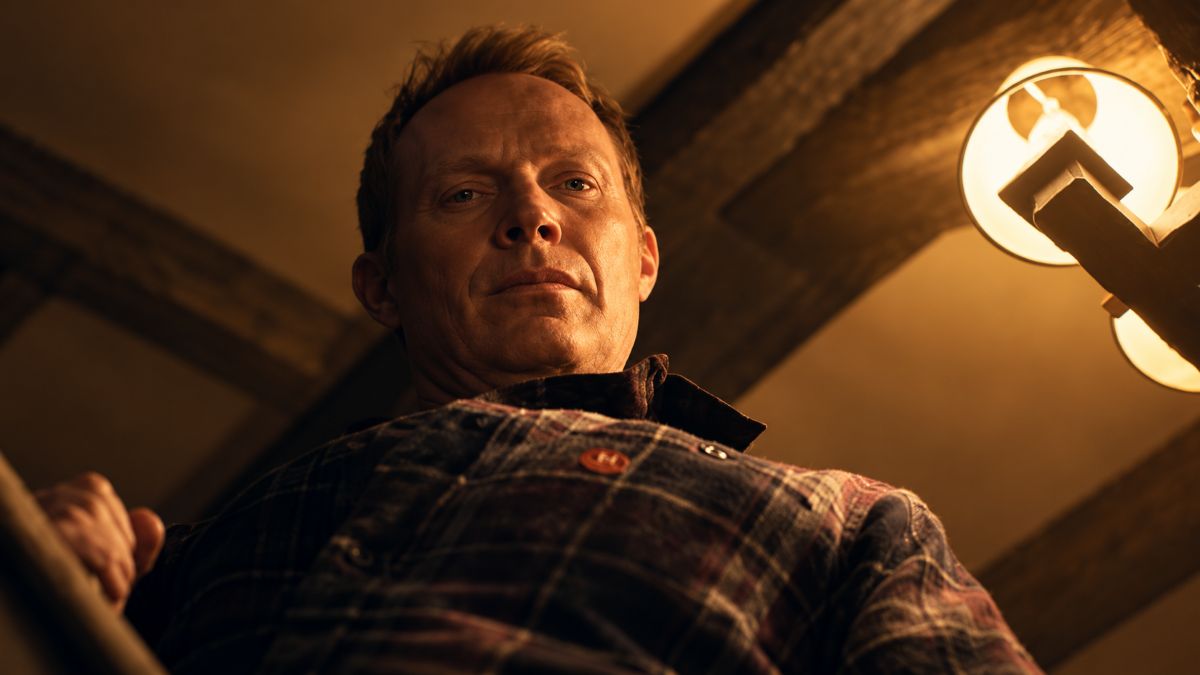
For years, Marvel’s streaming shows have often carried an invisible assignment: tell a story, introduce a character, tease a movie, leave three doors open and make sure nothing feels completely finished. VisionQuest is arriving with a different sales pitch.
The new trailer for the Disney+ series puts Paul Bettany’s Vision back at the center of the story, brings James Spader’s Ultron back into the conversation and confirms an October 14 premiere with two episodes. More importantly, Marvel is presenting the series as the conclusion to the television trilogy that began with WandaVision and continued through Agatha All Along.
That word — conclusion — may be the most interesting thing about the entire campaign.
Marvel finally has permission to finish something
WandaVision worked because it initially felt complete unto itself. Its sitcom pastiche, grief story and mystery structure created a defined emotional engine even as the finale connected back to the larger Marvel Cinematic Universe. What came afterward was more complicated. Marvel television expanded quickly, audiences were asked to track more characters across more platforms, and individual shows sometimes felt less like destinations than mandatory connecting flights.
VisionQuest has an opportunity to reverse that feeling. Instead of asking viewers to watch because this might matter to a movie three years from now, Marvel can ask them to watch because the Vision story itself is finally moving toward an answer. The character vanished after the WandaVision finale in a state of unresolved identity: same body, restored memories, uncertain soul.
A series built around that unresolved question does not need to pretend its primary value is franchise expansion. It already has a reason to exist.
Ultron’s return works because it is personal
Bringing Ultron back could easily have looked like one more nostalgia play. In this context, it makes thematic sense. Ultron is directly tied to Vision’s creation, and James Spader’s voice remains one of the most recognizable elements of Avengers: Age of Ultron. The reunion is not simply another villain returning because audiences remember him. It reconnects Vision to the question of where he came from and what separates a constructed being from the intentions of his creator.
The trailer leans into that history while introducing new threats and suggesting a more intimate chase story. That is useful. Vision is an enormously powerful character, but power has never been his most interesting attribute. His best scenes have generally been about consciousness, morality, love and the uncomfortable idea that memory may not be enough to define a person.
If the series understands that, the action can serve the identity story instead of replacing it.
A two-episode premiere is also a smart signal
Disney+ will launch VisionQuest with two episodes on October 14. That matters because dense mythology shows often need more than one chapter to establish momentum. A single premiere can spend most of its runtime explaining where everyone has been. Two episodes give the audience a better chance to understand the new status quo and still reach the actual engine of the season.
It also gives Marvel a stronger opening-night event. Streaming television has become increasingly crowded, and the old assumption that a recognizable logo will automatically generate weeks of conversation no longer holds. A two-episode launch can create enough narrative movement for viewers to feel that something happened immediately.
That is especially important for a character who has been absent from the center of Marvel storytelling for years.
The real test is whether the ending feels like an ending
The phrase “end of the trilogy” only becomes meaningful if VisionQuest actually resolves the emotional questions created by WandaVision. It can still introduce characters. It can still leave Marvel with possibilities. But the audience should not finish the season feeling as if eight episodes existed only to position the next logo on a release calendar.
That may sound like a small distinction. For Marvel television, it is a major one.
The best possible outcome for VisionQuest is not that it creates five new branches of the MCU. It is that viewers reach the final episode and feel that Vision’s long, strange journey through grief, memory and artificial life has reached a destination worth the wait.
For once, Marvel is marketing closure as part of the attraction. That may be exactly what its streaming era needs.
There is also a broader programming lesson in that promise. Streaming television has become filled with shows that are technically connected to famous brands but emotionally optional. Viewers can sense when a series is being used as connective tissue. A finite story tells them their time is being respected. They can enter, follow the character, and leave with an ending instead of another list of unresolved obligations.
That does not mean Marvel should stop building a shared universe. It means the universe works better when individual stories are allowed to become complete objects inside it. VisionQuest has the advantage of inheriting years of history without needing to turn every minute into setup. If it uses that advantage, the series could feel less like Marvel returning to an old thread and more like Marvel remembering why viewers cared about that thread in the first place.




Join the Conversation
Share your take on this story. Keep it relevant, respectful and on topic.