
There are legacy sequels built around unfinished mythology, villains who can return and action heroes who can be sent on one more mission.
Then there is St. Elmo’s Fire, a movie whose entire mythology was basically this: being young, attractive and terrified that adulthood was arriving faster than you could understand it.
That is exactly why a sequel might work.
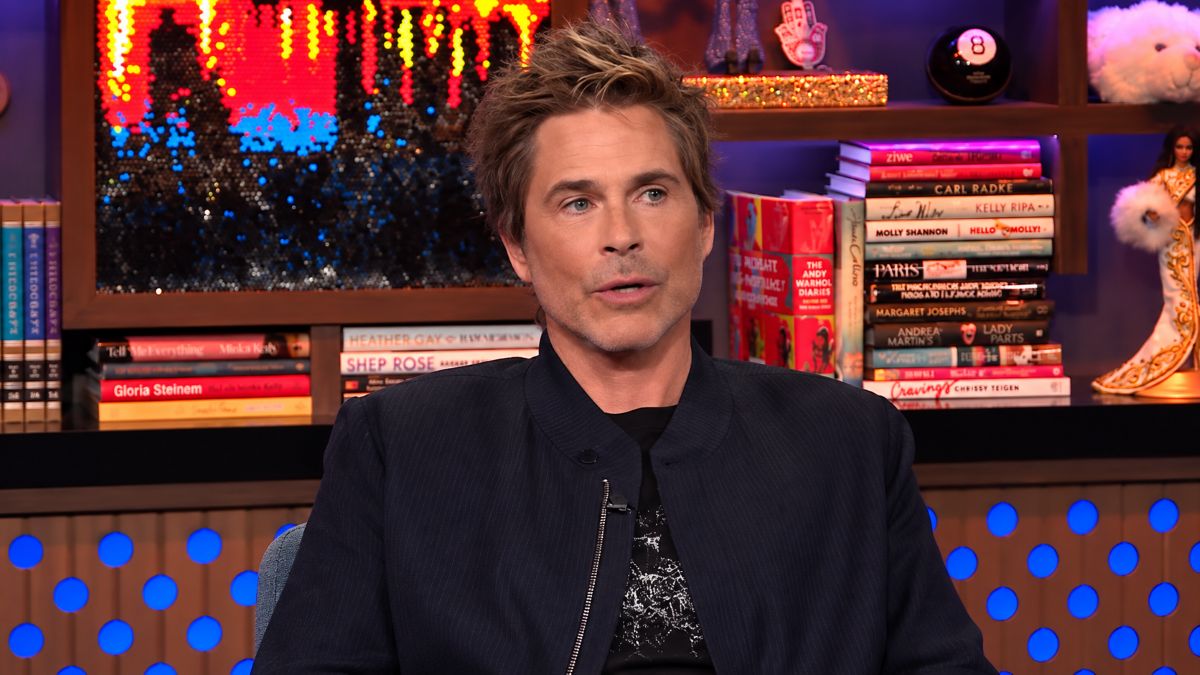
Rob Lowe says the long-discussed follow-up remains in development, that the actors want to do it and that a draft of the script is expected in early October. Nothing about that guarantees a movie will actually reach production. But the project now seems far enough along to ask the question that matters more than whether the cast can be reunited.
What would these characters look like after forty years of consequences?
The original movie was already about the end of youth
St. Elmo’s Fire is remembered as a Brat Pack artifact because of the cast, the clothes, the soundtrack and the very specific sheen of 1980s Hollywood youth culture.
But underneath that packaging, the movie was anxious.
Its characters were leaving college, discovering that friendship could not protect them from work, money, addiction, romantic failure and the humiliating realization that becoming an adult did not automatically make anyone good at adulthood.
That gives a sequel a natural thematic bridge.
A story about people afraid of who they might become can return decades later and ask whether they became those people anyway.
That is much stronger than simply recreating the bar, playing the song and waiting for applause.
The cast’s real lives make the reunion more interesting
The original ensemble included Lowe, Demi Moore, Emilio Estevez, Judd Nelson, Ally Sheedy, Andrew McCarthy, Mare Winningham and others whose careers became part of the public history of the era itself.
That creates a layer most legacy sequels cannot manufacture.
The audience has aged with the actors.
Some viewers who first saw the characters panic over post-college life now have adult children of their own. The idea of reunion therefore operates on two levels: the fictional friends seeing one another again and the audience confronting the distance between the cultural fantasy of the Brat Pack and the reality of middle age.
A smart script can use that instead of hiding it.
The sequel should resist making everyone successful
Legacy movies often flatter their returning characters. The hero is older but still cool. The old romance still matters. The familiar location has become sacred ground.
St. Elmo’s Fire would be more honest if it did the opposite.
These characters were messy when they were young. Some should still be messy. Some should have built lives that look successful from the outside and feel empty from the inside. Some should have changed beyond recognition. Some friendships should no longer fit.
Time should have cost them something.
That is where a sequel could earn its existence rather than simply cashing in on recognition.
The central drama does not need to be a giant external event. It could be a reunion, a death, a marriage, a child’s crisis or any circumstance that puts the old group in the same room long enough to discover that memory has preserved versions of one another that no longer exist.
Nostalgia works best when it is allowed to hurt
The legacy-sequel boom has taught Hollywood that audiences will pay to revisit people and places they loved. It has also taught audiences to recognize when nostalgia is doing all the work.
The projects that last are usually the ones that let time matter.
A new St. Elmo’s Fire has an unusual opportunity because the original was never really about adventure. It was about transition. There is another transition waiting now: careers winding down, parents dying, marriages changing, children leaving, bodies aging and identities becoming harder to reinvent.
Those are not obstacles to the sequel. They are the sequel.
Lowe’s latest update is encouraging because the project appears to be moving from vague reunion talk toward an actual script. The next step will reveal whether the filmmakers understand what they have.
Nobody needs the Brat Pack to pretend it is 1985 again.
A lot of people might be interested in seeing what happened after 1985 ended.
There is also a generational opportunity that did not exist when sequel talk first began. The Brat Pack has itself become a subject of retrospective documentaries, memoirs and reassessment. The actors are no longer simply returning to old roles; they are returning after decades in which the culture publicly reinterpreted what that era of fame meant.
A thoughtful sequel could use that distance. It could acknowledge the seductive mythology of youthful success while showing what the characters learned after the cameras — and the audience — stopped treating youth as permanent.
The script will ultimately decide whether the reunion feels necessary or merely inevitable.


Join the Conversation
Share your take on this story. Keep it relevant, respectful and on topic.